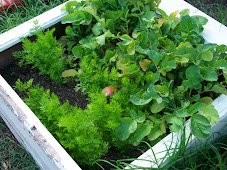
Composting is good for the garden and the enviroment!
That was my pitch this past weekend for a composting Demonstration! I was asked by Placer Grown
http://www.placergrown.org/ to teach about backyard composting. Pretty Awesome! We attended an event called "Family Day on the Farm" it was held at a Mandarin Farm. The family had a great time. Kids got to build things out of Veggies, play games and eat great food! They had a raffle and a dessert auction. I won twice in the auction. I won a Private wine tasting In Auburn, at the Lone Buffalo Vineyards
http://www.lonebuffalovineyards.com/ . I also won a wonderful wool purse that was handmade.
I never win anything, so it was pretty AWESOME to win!
Here was our booth! Kids helped make a display board and we posted the information and pictures of differnt recycled compost bins. We also brought our own recycled compost bin made from wood pallets. Throughout the event People brought us there compostable trash. Such as produce and the forks that were made from corn. They take a year to biodegrade back into our planet, pretty cool stuff.
We also got all the veggies from "The Build your own Veggie Art" folks to compost at the end of the event.
Composting Veggies is a great way to reduse a carbon foot print. Its great for the garden!
Here is the handout we made to give to people at the event! Just an easy discription on how to get started on backyard composting.
Compost
What Is Compost?
Compost is organic material that can be used as a soil amendment or as a medium to grow plants. Mature compost is a stable material with a content called humus that is dark brown or black and has a soil-like, earthy smell. It is created by: combining organic wastes (yard trimmings, food wastes, manures) in proper ratios into piles, rows, or vessels; adding bulking agents (wood chips) as necessary to accelerate the breakdown of organic materials; and allowing the finished material to fully stabilize and mature through a curing process.
Natural composting, or biological decomposition, began with the first plants on earth and has been going on ever since. As vegetation falls to the ground, it slowly decays, providing minerals and nutrients needed for plants, animals, and microorganisms. Mature compost, however, includes the production of high temperatures to destroy pathogens and weed seeds that natural decomposition does not destroy.
Create Your Own Compost Pile
You can create a compost pile in your backyard or indoors, depending on your available space. Backyard and indoor composting are most suitable for households to convert small quantities of organic materials, such as yard trimmings and food scraps, into compost that can be spread in garden beds, under shrubs, or use it as potting soil for outdoor plants.
All composting requires three basic ingredients:
• Browns—Includes materials such as dead leaves, branches , twigs
• Greens—Includes materials such as grass clippings, vegetable waste, fruit scraps, and coffee grounds
• Water
Having the right amount of greens, browns, and water is important for compost development. Ideally, your compost pile should have an equal amount of browns to greens and alternate layers of organic materials of different-size particles. The brown materials provide carbon for your compost and the green materials provide nitrogen, while the water provides moisture to help breakdown the organic matter.
There is no one "right" way to compost, but you may want to follow one of the approaches below:
Backyard Composting
1. Select a dry, shady spot near a water source for your compost pile or bin.
2. Before you add your brown and green materials, make sure larger pieces are chopped or shredded.
3. Cover your composting area with a 6-inch layer of brown materials.
4. Add a 3-inch layer of green materials and a little soil or finished compost.
5. Lightly mix the two layers above.
6. Top with a 3-inch layer of brown materials, adding water until moist.
7. Turn your compost pile every week or two with a pitchfork to distribute air and moisture. Move the dry materials from the edges into the middle of the pile. Continue this practice until the pile does not re-heat much after turning.
8. Your compost will be ready in one to four months, but let the pile sit for two weeks before using.
Tools you may need:
• Pitchfork
• Square-point shovel or machete
• Water hose with a spray head
Indoor Composting
If you do not have space for an outdoor compost pile, you can compost materials indoors using a special type of bin, which you can buy or make yourself. Remember to tend your pile and keep track of what you throw in. A properly managed compost bin will not attract pests or rodents and will not smell bad. Your compost should be ready in 2 to 5 weeks.
Build your own indoor bin:
1. Drill 1/2-inch diameter holes in the bottom and sides of a plastic garbage can.
2. Place a brick in the bottom of a larger garbage can, surround the brick with a layer of wood chips or soil, and place the smaller can inside on top of the brick.
3. Wrap insulation around the outer can to keep the compost warm and cover the cans with a lid.
What to compost:
• Animal ( cow or horse) manure
• Cardboard rolls
• Clean paper
• Coffee grounds and filters
• Cotton rags
• Dryer and vacuum cleaner lint
• Eggshells
• Fireplace ashes
• Fruits and vegetables
• Grass clippings
• Hair and fur
• Hay and straw
• Houseplants
• Leaves
• Nut shells
• Sawdust
• Shredded newspaper
• Tea bags
• Wood chips
• Wool rags
• Yard trimmings
Leave Out & The Reason Why Not To Use
• Black walnut tree leaves or twigs
o Releases substances that might be harmful to plants
• Coal or charcoal ash
o Might contain substances harmful to plants
• Dairy products (e.g., butter, egg yolks, milk, sour cream, yogurt)
o Create odor problems and attract pests such as rodents and flies
• Diseased or insect-ridden plants
o Diseases or insects might survive and be transferred back to other plants
• Fats, grease, lard, or oils
o Create odor problems and attract pests such as rodents and flies
• Meat or fish bones and scraps
o Create odor problems and attract pests such as rodents and flies
• Pet wastes (e.g., dog or cat feces, soiled cat litter)
o Might contain parasites, bacteria, germs, pathogens, and viruses harmful to humans
• Yard trimmings treated with chemical pesticides
o Might kill beneficial composting organisms
Did You Know That Compost Can...
• Suppress plant diseases and pests.
• Reduce or eliminate the need for chemical fertilizers.
• Promote higher yields of agricultural crops.
• Facilitate reforestation, wetlands restoration, and habitat revitalization efforts by amending contaminated, compacted, and marginal soils.
• Cost-effectively remediate soils contaminated by hazardous waste.
• Remove solids, oil, grease, and heavy metals from stormwater runoff.
• Capture and destroy 99.6 percent of industrial volatile organic chemicals (VOCs) in contaminated air.
• Provide cost savings of at least 50 percent over conventional soil, water, and air pollution remediation technologies, where applicable.
What Can Compost Be Used For?
• Farmers use compost for enhancing crops and for sod farms.
• Landscapers use compost as a soil amendment and for decorative purposes at properties, golf courses, and athletic fields.
• Landfill operators use compost to cover landfills and carry out reclamation projects.
• Nurseries use compost for enhancing plant and forest seedling crops in reforestation projects and to prevent certain plant diseases such as root rot.
• Public agencies use compost for landscaping highway median strips, parks, recreational areas, and other public property and remediating contaminated or eroded sites.
• Homeowners use mature compost to enrich gardens, improve the soil around trees and shrubs, use as soil additive for house plants and planter boxes and as a protective mulch for trees and shrubs.
Happy Recycling!!!